
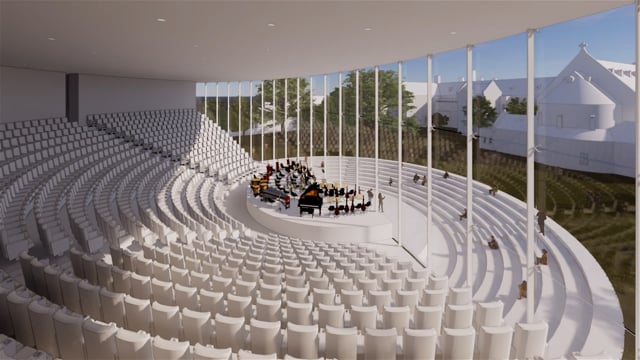
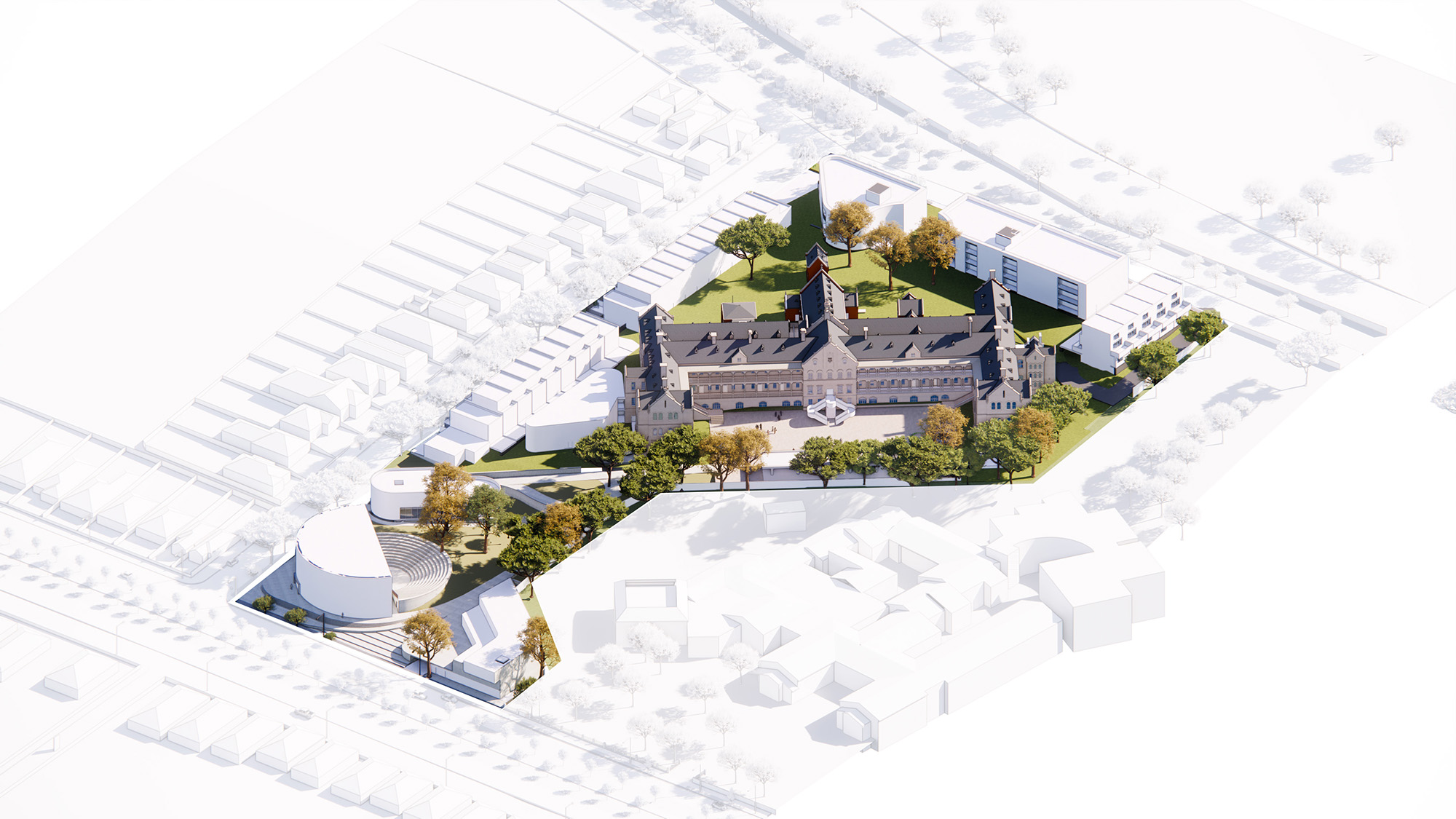
This 26,000m² masterplan responds to a 13-metre east-west gradient and the elevated siting of a heritage monastery, whose axial orientation shaped the spatial logic of the entire precinct. The axis defines two programmatic zones—cultural and residential—and guides circulation, view corridors, and built form placement. Architecture is set back to preserve sightlines, with new structures framing a central parkland that prioritises civic space and landscape continuity. A public path connects Hawthorn Road to the monastery’s original frontage, acknowledging historic links to St Georges Road. The design reinterprets the site’s former masonry perimeter wall through contemporary built and landscape elements, incorporating salvaged bricks to mark thresholds between public and private realms. Pedestrian movement is prioritised, with DDA-compliant paths and limited vehicular access supporting walkable connections and adaptive reuse. Controlled service access via Hartington Street ensures operational flexibility without compromising landscape integrity. The built form strategy defines a continuous edge condition with deliberate breaks to enable permeability and garden activation. Overall, the plan balances heritage visibility, spatial clarity, and community benefit—framing architecture as a civic gesture that supports public life, respects historical context, and reinforces the site’s role as a cultural and recreational anchor within the urban fabric.

This 26,000m² masterplan responds to a 13-metre east-west gradient and the elevated siting of a heritage monastery, whose axial orientation shaped the spatial logic of the entire precinct. The axis defines two programmatic zones—cultural and residential—and guides circulation, view corridors, and built form placement. Architecture is set back to preserve sightlines, with new structures framing a central parkland that prioritises civic space and landscape continuity. A public path connects Hawthorn Road to the monastery’s original frontage, acknowledging historic links to St Georges Road. The design reinterprets the site’s former masonry perimeter wall through contemporary built and landscape elements, incorporating salvaged bricks to mark thresholds between public and private realms. Pedestrian movement is prioritised, with DDA-compliant paths and limited vehicular access supporting walkable connections and adaptive reuse. Controlled service access via Hartington Street ensures operational flexibility without compromising landscape integrity. The built form strategy defines a continuous edge condition with deliberate breaks to enable permeability and garden activation. Overall, the plan balances heritage visibility, spatial clarity, and community benefit—framing architecture as a civic gesture that supports public life, respects historical context, and reinforces the site’s role as a cultural and recreational anchor within the urban fabric.